Triumph TR4 Surrey Top
The TR4's two-piece hardtop and the folding vinyl insert that the factory called the Surrey top, 1961 to 1967: what each part was, how the roof worked, and how the name came to mean the whole of it.
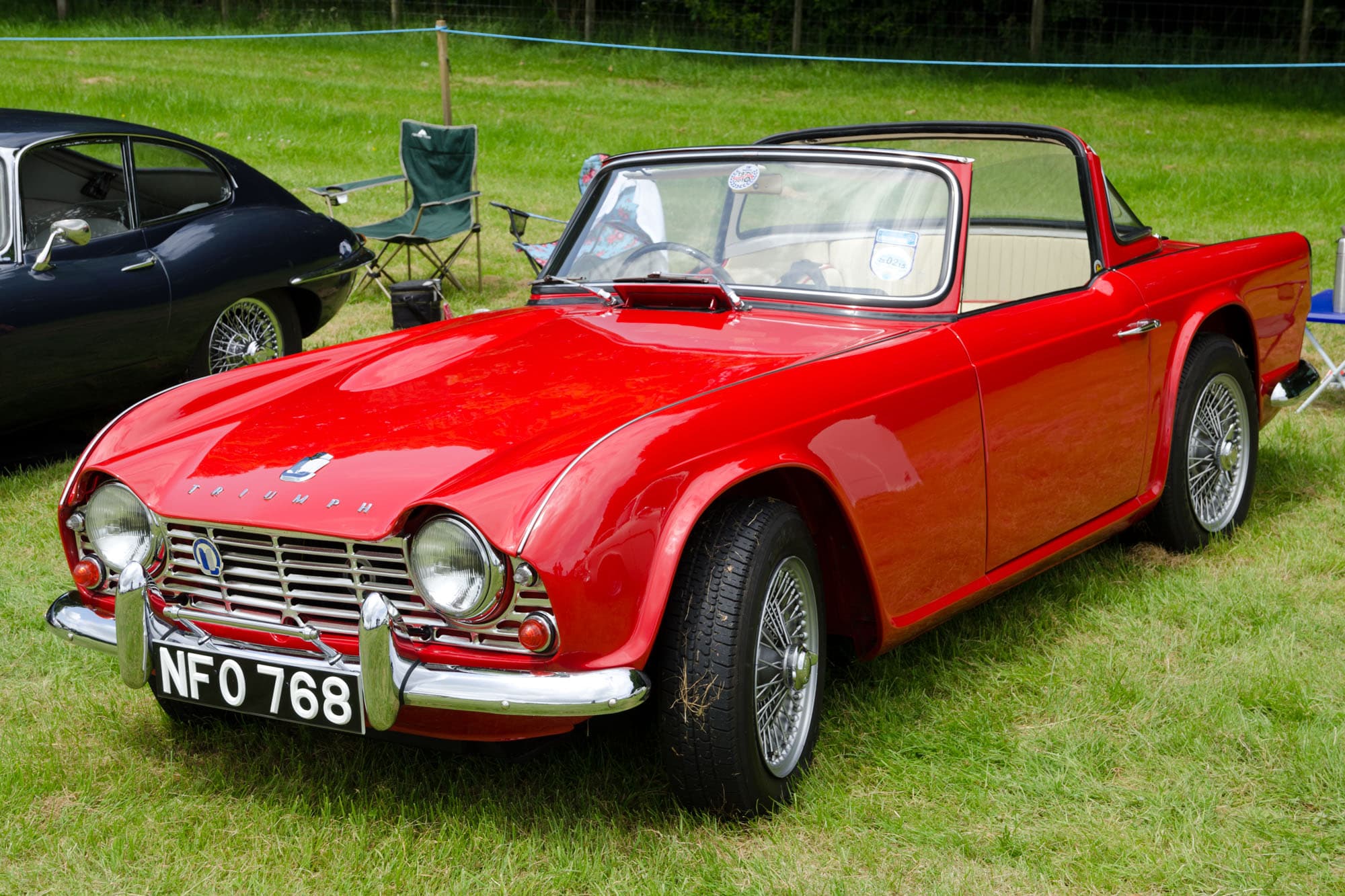
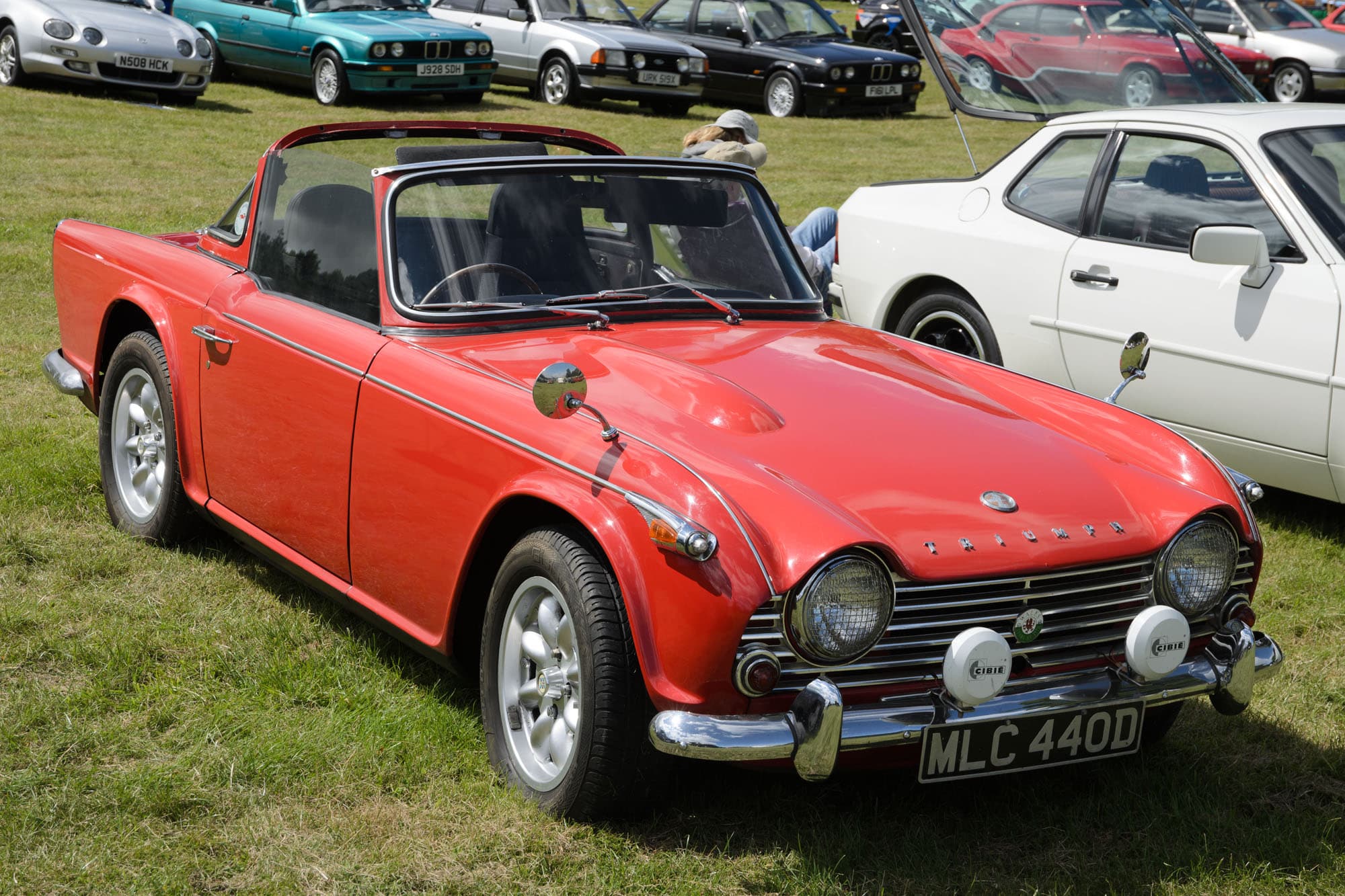
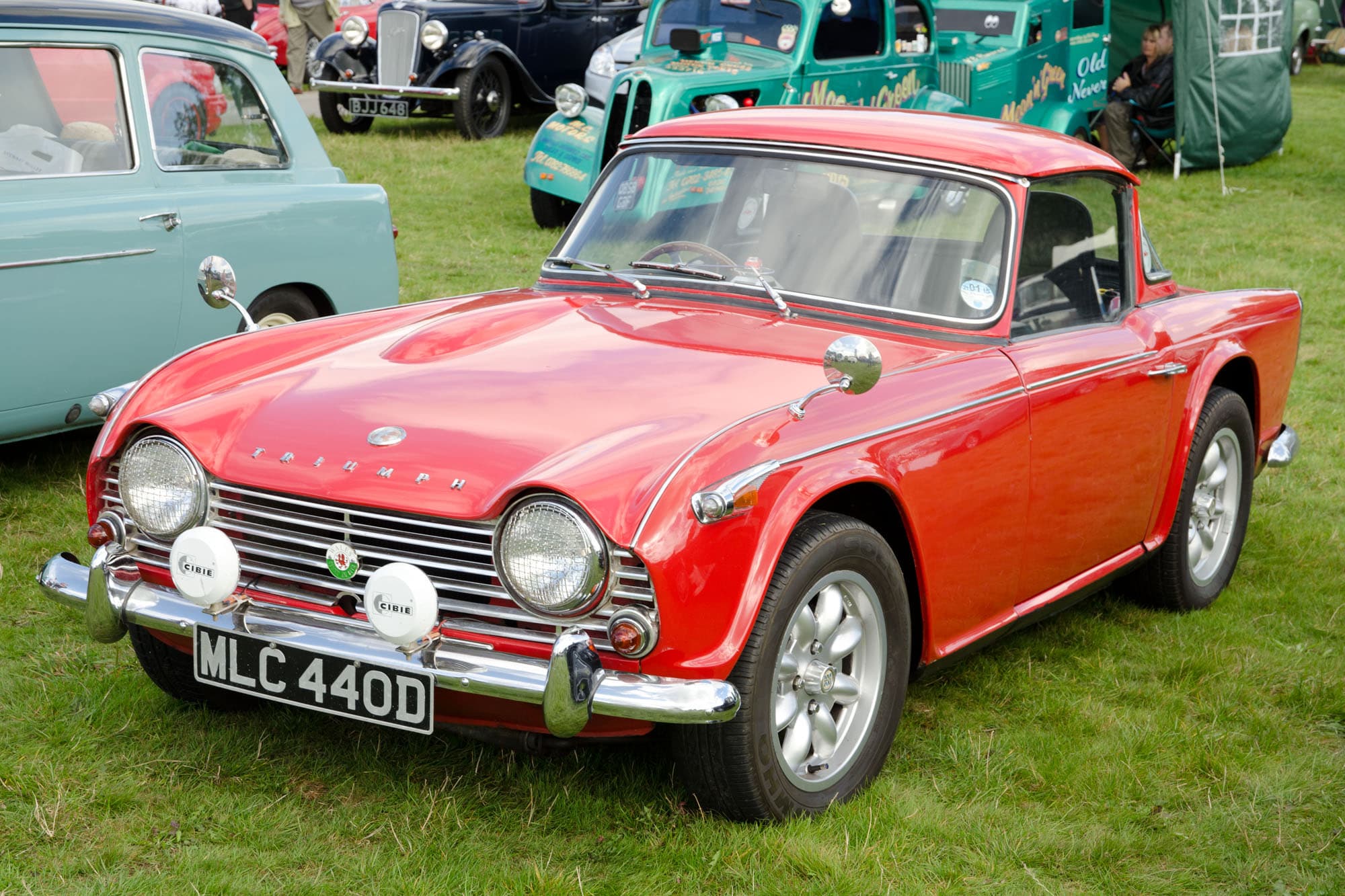
Ask an owner what a Surrey top is and the answer is often the TR4's whole hardtop: the fixed rear section with its wrap-round window and the roof panel that lifts out of it. Ask Standard-Triumph in 1961 and the answer was something smaller. For the factory, and for the magazines that described the TR4 at its launch, the Surrey top was only a sheet of vinyl on a light frame, carried in the car to close the gap over the seats when the steel roof panel had been left at home. Both uses are now common; this page follows the period sources and explains the other.source 1source 2source 3source 4
What the period sources said, 1961–67
The launch reports all used the narrow sense. Bill Boddy wrote in Motor Sport in September 1961 that the roof panel was detachable, "a Vynide 'Surrey' being supplied to close the gap in the event of rain". Car and Driver, in October, gave the insert its factory name, and its writer, Dennis May, explained how it was carried:
Out of use, this rolls up for stowage as a compact sausage.
| When | Who | What "Surrey" meant |
|---|---|---|
| September 1961 | Motor Sport, Bill Boddy | The vinyl insert |
| October 1961 | Car and Driver, Dennis May | The insert, "known in factory parlance as the 'surrey top'" |
| December 1961 | Motor Trend, Gordon Wilkins | The insert |
| November 1962 | Motor Sport, at the London show | Loosely, the whole option: "a TR4 with its sunshine Surrey Top" |
| Later | Graham Robson, in Rimmer's parts catalogue | The insert, "a canvas 'Surrey' top with a simple bracing frame" fitted in place of the roof panel |
| Today | Many clubs, specialists and sellers | The whole two-piece hardtop |
The wider use is the one met most often in club and specialist writing today: the Vintage Triumph Register, the TR Register and Revington TR all use "Surrey top" for the hardtop as a whole. The TR Drivers' Club holds to the factory's sense, and says so plainly: "The entire hard top assembly is often mistakenly referred to as a Surrey top." Ate Up With Motor notes that even some journalists of the time used the name loosely, while the factory kept it for the vinyl panel. No source read explains why the factory chose the name; Motor Sport thought in 1962 that it sounded "delightfully Victorian".source 5source 1source 6source 7source 8source 9source 2source 3source 10
How it worked
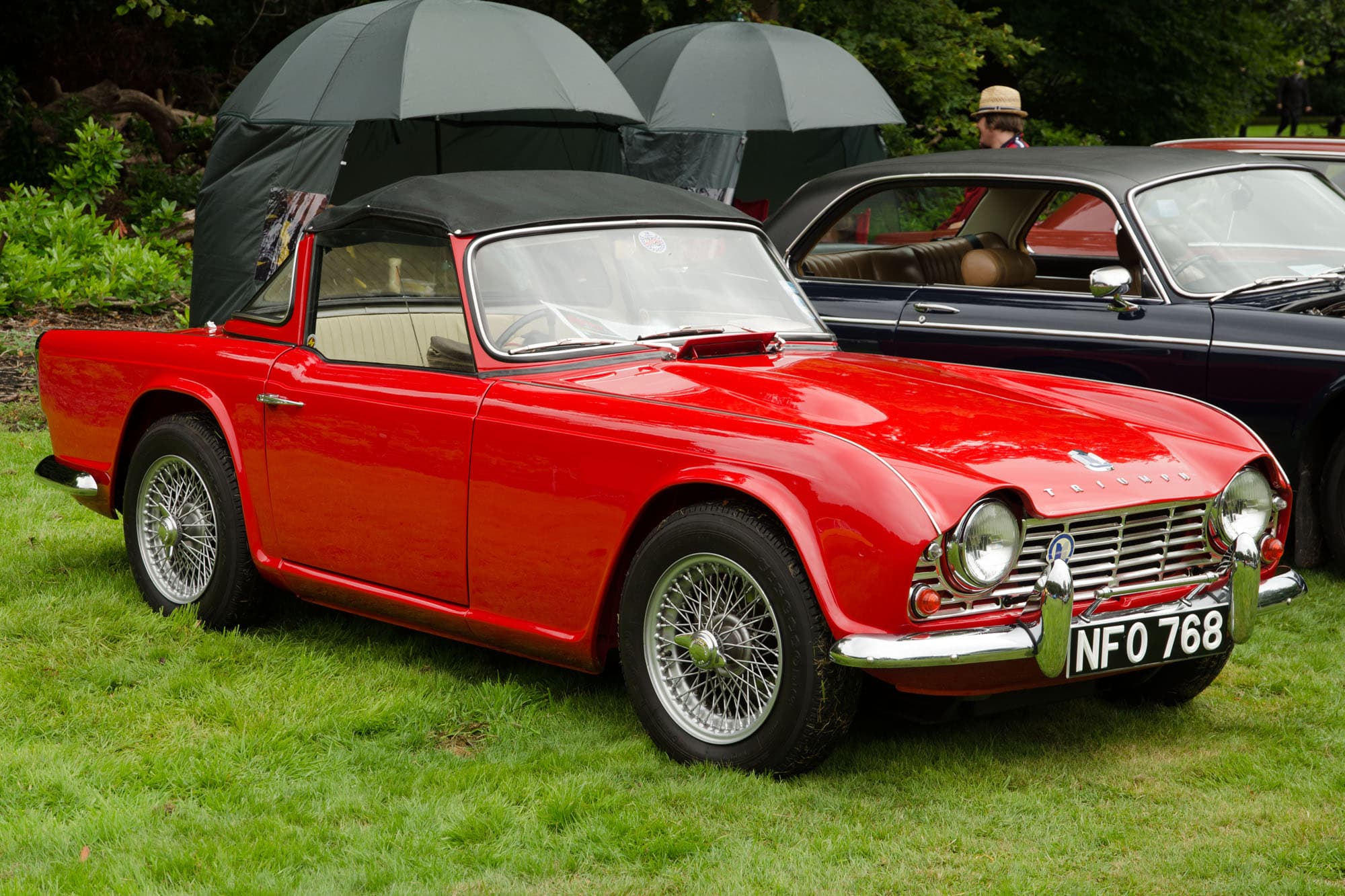
The hardtop came off the car as a whole, held by four nuts, two at the top of the windscreen (windshield) frame and two at the foot of the rear window, and its roof panel came off on its own. With the panel out, the rear section and its glass window stayed in place, meeting the wind-up windows, so that the car was open overhead but closed behind. The panel itself was too big to carry in the car, which is why the insert existed: it rolled up and stowed, ready for a shower. A hardtop car could have the ordinary hood (soft top) as well.
The first roof panels were aluminium and the rest steel: the TR Drivers' Club puts the change after the first 500 cars, and Ate Up With Motor says steel was used on all but the earliest. Krause tells it the other way round, with a canvas panel first and a metal one later in the run, but Car and Driver's report of October 1961 already describes the lift-out metal panel with the insert as its rain cover. A hardtop car weighed a little more, perhaps 11 kg (25 lb), Ate Up With Motor suggests.
The finest point in design is the hard-top with detachable roof panel. Triumphs are the first firm to realise that the draught in an open car comes from the rear.
Motor Sport's own hardtop car of January 1963 fared worse: it leaked at a window joint and dripped onto the seat when a door was opened. The same test shows what the option cost in Britain: the hardtop car's basic price was £35 more than the open car's, about £42 with purchase tax, and the maker still charged about £42 extra for it with the TR4A in 1966. American price lists showed the hardtop car separately, $150 dearer, with the insert as a further option.
On the TR4A and after
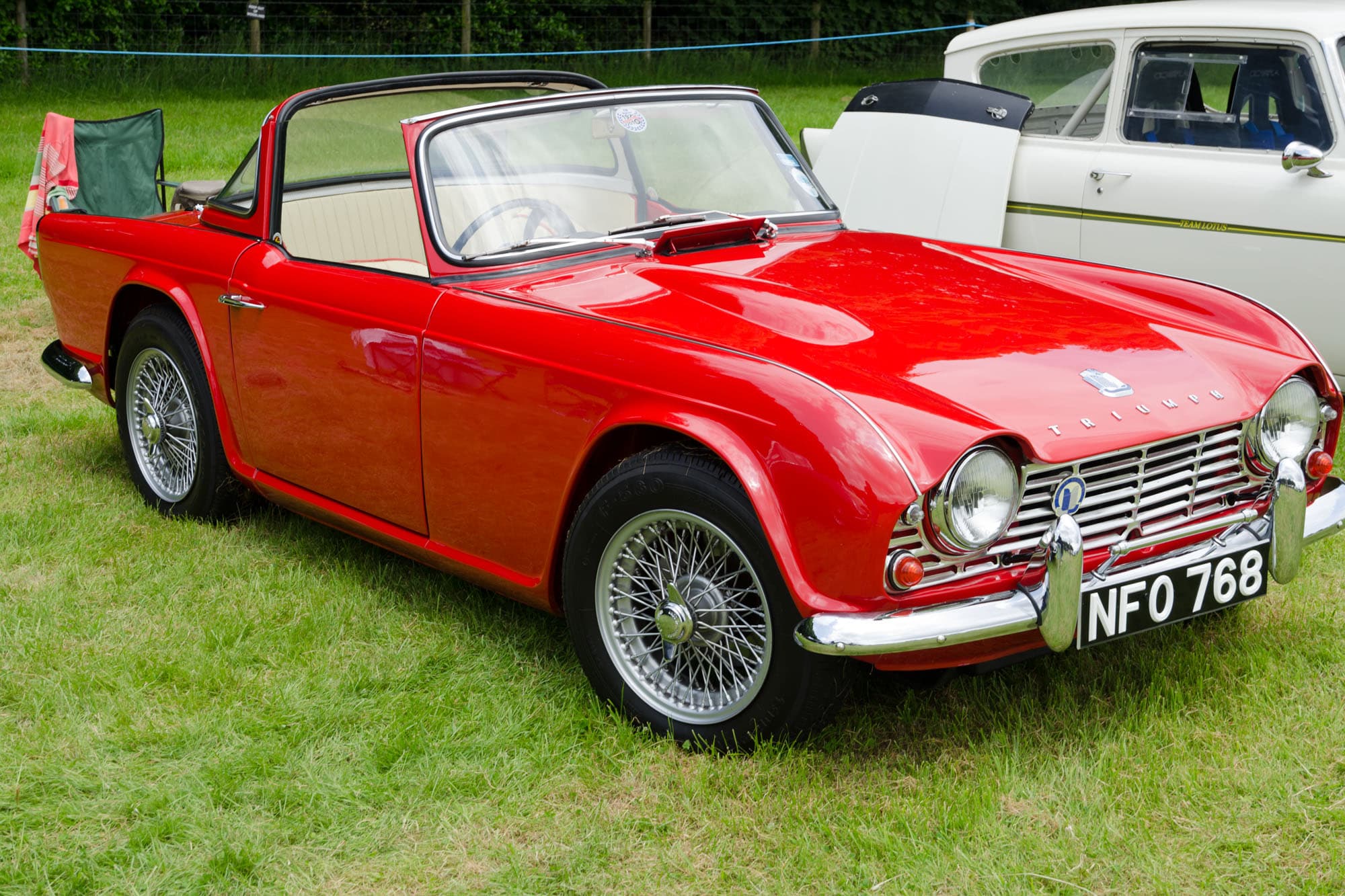
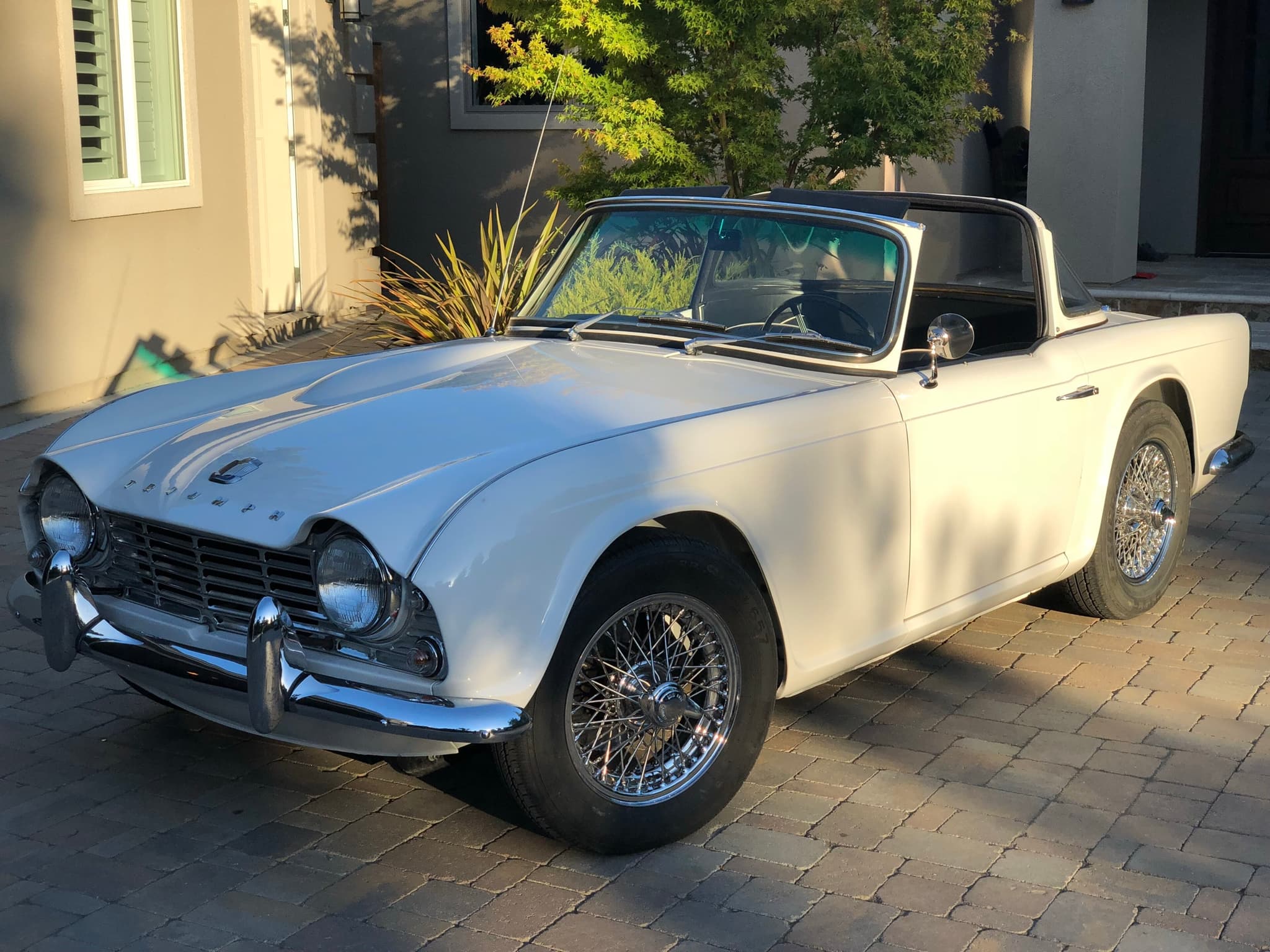
The TR4A kept both parts. Standard-Triumph's British prices of May 1966 still list a hardtop model, the TR Register lists a hardtop for each car, and to the Vintage Triumph Register the Surrey top was "a desirable option" on the TR4A. Only the hood changed, to a pattern that folded away behind the seats.
The roof outlived the four-cylinder engine. Standard-Triumph's Italian brochure for the TR5 PI, of October 1967, offers the "Surrey Top" as an extra for the hardtop model only, and the club guides list it on the TR5 and the TR250. No source read offers one on the TR6, so on the evidence read the option ran from 1961 to 1968.
It was not much wanted when new. The Vintage Triumph Register thinks it "was not popular at the time, probably because most people did not really understand what it was and Triumph did not market it correctly", and Krause writes that it "never really caught on until the 1990s".source 13source 4source 15source 3source 11source 16source 17
Sources
Every source the site cites is on the sources page.
- Primarymade at the time, by the maker or by people who were there
- Referenceserious later work: clubs, specialists, magazines, books
- Dennis May, "Technical Report" on the TR-4 (cover story), Car and Driver, Oct 1961, pp. 19–23, pp. 21–22, the hardtop and the "surrey top"; p. 22, "known in factory parlance as the 'surrey top.'"; p. 22: four nuts; the soft top for hardtop cars. Primary
- Aaron Severson, "Grandfather's Ax: The Many Evolutions of the Triumph TR4, Part 1: TR4 and TR4A", Ate Up With Motor, 22 Oct 2012, "The Triumph TR4": the factory's use of the name; modern usage; the factory used the term only for the vinyl panel; steel on all but the earliest cars; the insert stowed for showers; perhaps 25 lb heavier; the hardtop as a model on US price lists; the insert as an extra; the Targa comparison. ateupwithmotor.com/model-histories/triumph-tr4-tr4a/view-all Reference
- Arthur Kelly (the VTR's TR4 consultant), "TR4": "A Historical Overview of the TR4" and the TR4 commission-number page, Vintage Triumph Register, the Surrey top as the two-piece roof; the wider use of the name; the roof panel and the insert; "not popular at the time". vintagetriumphregister.org/tr4 Reference
- TR Register, "Triumph TR4 / TR4A Buyers Guide", the hardtop as the Surrey top; "similar to but earlier than the 'targa' design by Porsche"; hardtops on the TR4 and TR4A. tr-register.co.uk/resources/buyers-guide/triumph-tr4-4a Reference
- Bill Boddy ("W. B."), "The new Triumph TR4", Motor Sport, Sep 1961, p. 17, p. 17, "a Vynide 'Surrey'". motorsportmagazine.com/archive/article/september-1961/17/the-new-triumph-tr4 Primary
- Gordon Wilkins, "Report: New Triumph TR-4", Motor Trend, Dec 1961, pp. 64–66, pp. 64–65, the hardtop and its insert; the rear section and the wind-up windows. Primary
- Motor Sport, "Random Reflections on – Earls Court 1962", Nov 1962, p. 17, p. 17, "sunshine Surrey Top". motorsportmagazine.com/archive/article/november-1962/17/random-reflections-on-earls-court-1962 Primary
- Graham Robson (essay "15 Years of Evolution"), Triumph TR2 – TR3/3A, TR4/4A – TR5, TR250 1953–1968 Parts & Accessories Catalogue, Rimmer Bros, edn 2.1 (source code TR2512), Part 1, p. 5, Robson's essay: "a canvas 'Surrey' top with a simple bracing frame". rimmerbros.com/images/PDFs/TR2-5_Part1.pdf Reference
- TR Drivers Club, "Early Cars: The TR4", "The entire hard top assembly is often mistakenly referred to as a Surrey top"; aluminium panels on the first 500 cars; "the first such roof system on a production car". trdrivers.com/earlycars/tr4.html Reference
- Revington TR, "TR4", the wider use of the name. revingtontr.com/the-tr-series/tr4 Reference
- G. William Krause, The Illustrated History of Triumph Sports and Racing Cars, CarTech, 2017, pp. 53–54, the panel too big to carry; the canvas-first sequence; p. 54, "never really caught on until the 1990s". static.summitracing.com/global/images/technicalarticles/sad-ct596.pdf Reference
- Motor Sport, "The Triumph TR4: a rugged British sports car", with the data panel "The Triumph TR4 hard-top", Jan 1963, pp. 9–10, pp. 9–10: the hard-top's price over the open car's; the leak. motorsportmagazine.com/archive/article/january-1963/9/the-triumpth-tr4 Primary
- Motor Sport, "Cornering fast in a Triumph TR4A…" (Standard-Triumph advertisement, with price list), May 1966, p. 49, p. 49, the TR4A hard-top's price; p. 49, the "Hard-top model". motorsportmagazine.com/archive/article/may-1966/49/1-cornering-fast-in-a-triumph-tr4a-youre-glad-of-2 Primary
- Motor Sport, "Letters from Readers" (the TR4A letters), Apr 1967, p. 60, a reader on the hard-top. motorsportmagazine.com/archive/article/april-1967/60/letters-readers-april-1967 Primary
- Vintage Triumph Register, "TR4A" (history, change points and yearly output, buyer's and spotter's guides, numbering), "a desirable option". vintagetriumphregister.org/tr4a Reference
- Standard-Triumph, Nuova Triumph TR5 PI (fold-out sales brochure), Italy, Oct 1967, ref. 387/1067/IT, the Surrey Top as an extra for the hardtop model. Primary
- TR Drivers Club, "Early Cars: The TR4A", the Surrey on the later cars. trdrivers.com/earlycars/tr4A.html Reference