Triumph TR4 vs TR4A
Two cars under one Michelotti body: the TR4 of 1961–65, and the TR4A of 1965–67, which North America could also buy with the old live axle. The TR4A's cars with independent rear suspension are often called the TR4 IRS, an owners' name.
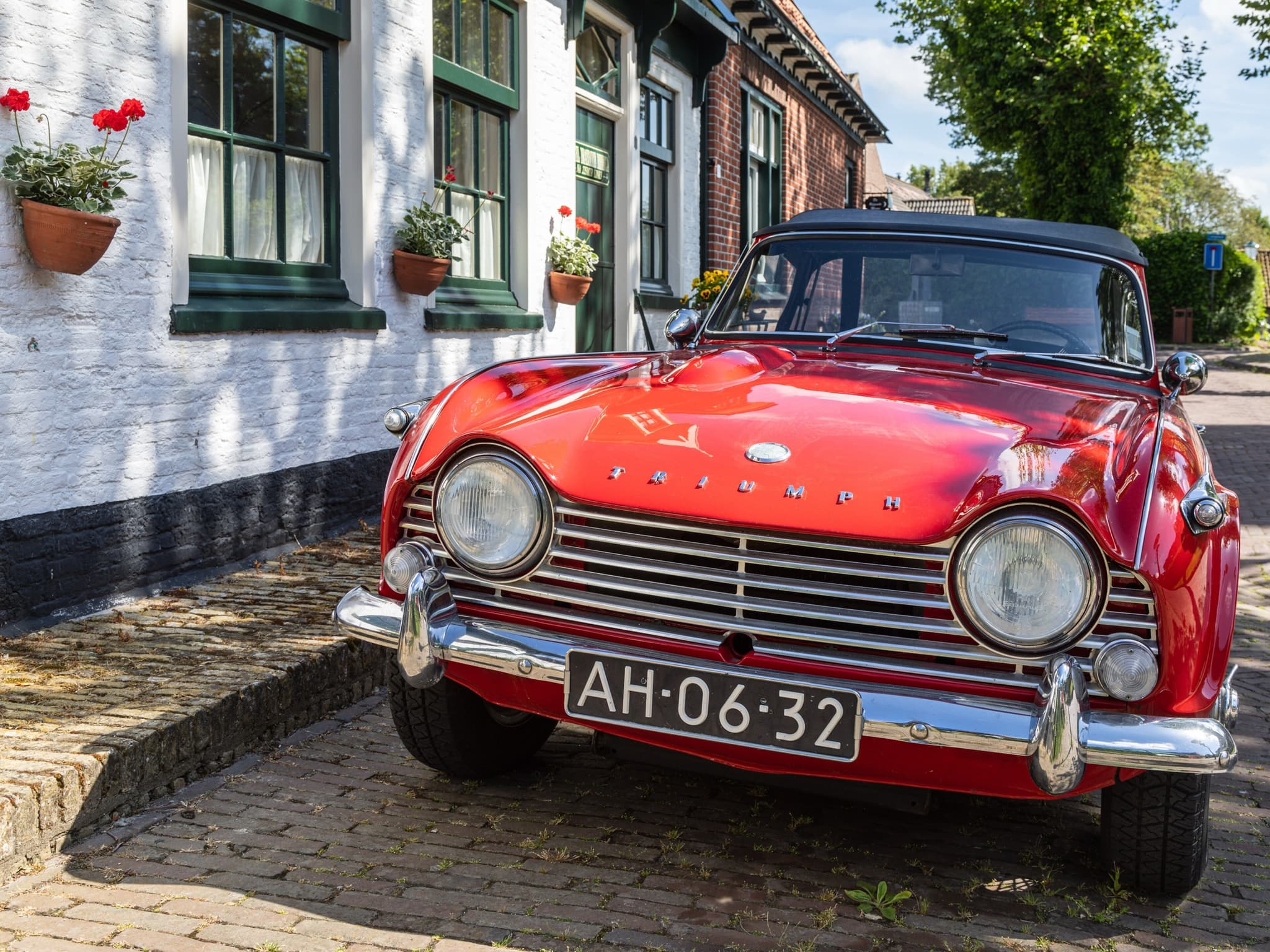
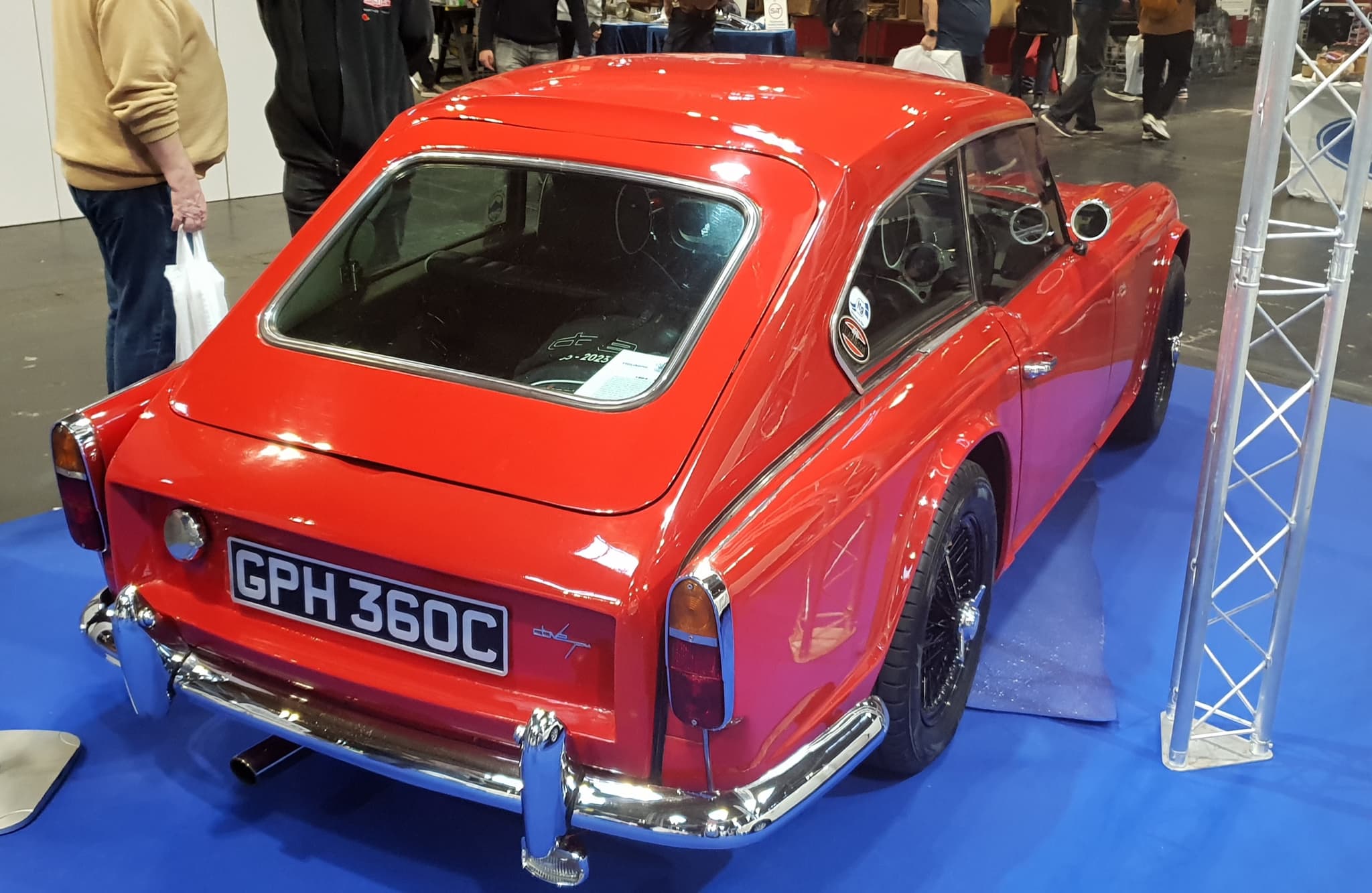
Standard-Triumph built the TR4 from July 1961 to January 1965 and the TR4A from January 1965 to July 1967, both under the one body by Giovanni Michelotti. American magazines and advertising wrote them TR-4 and TR-4A. The TR4A came in two forms: with independent rear suspension in every market, and with a live rear axle for North America only. L. F. Dove of Wimbledon sold a fastback conversion of both, the Dové GTR4. Each version's production is in the line-up.source 1source 2source 3source 4
The versions at a glance
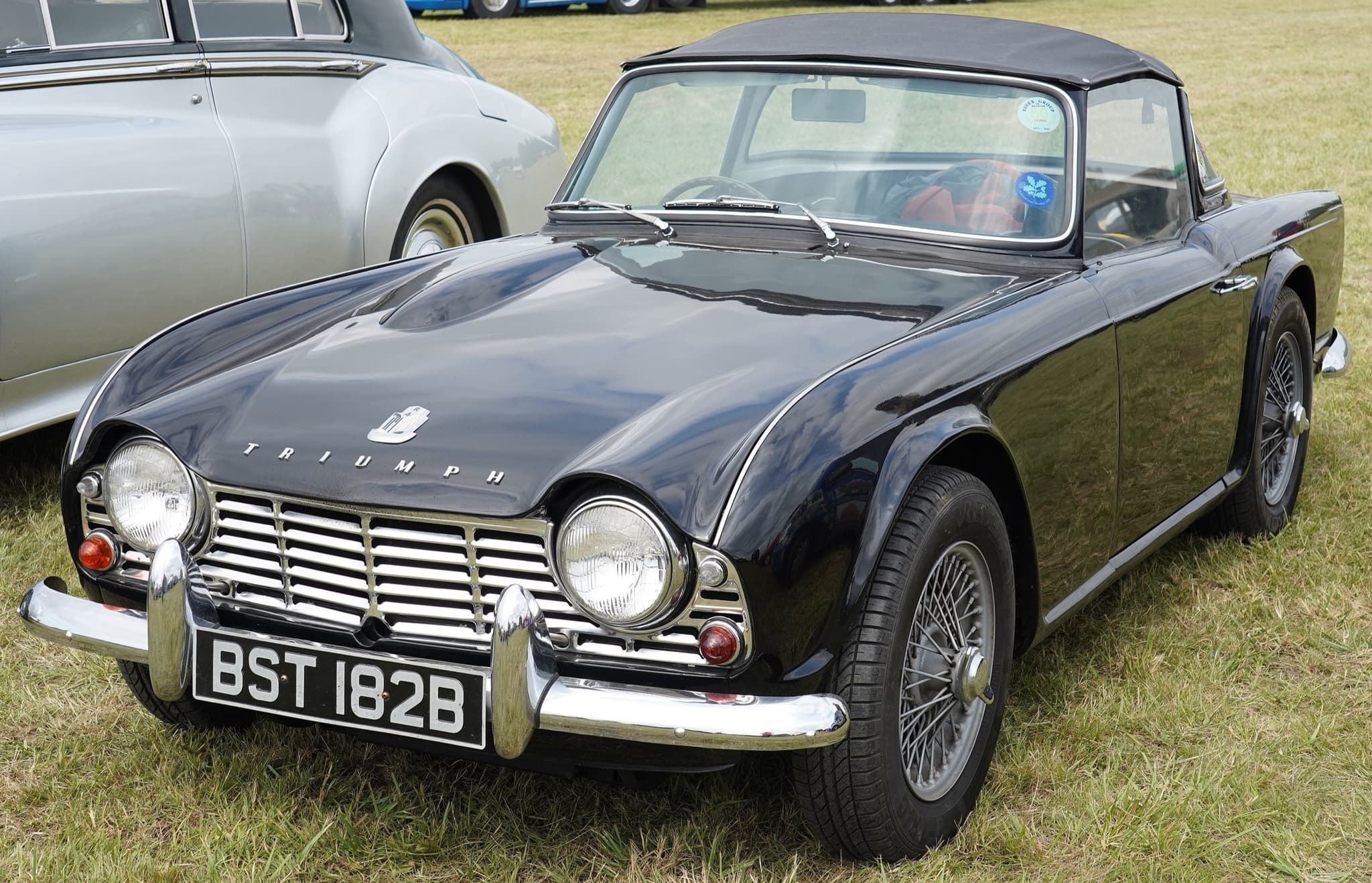
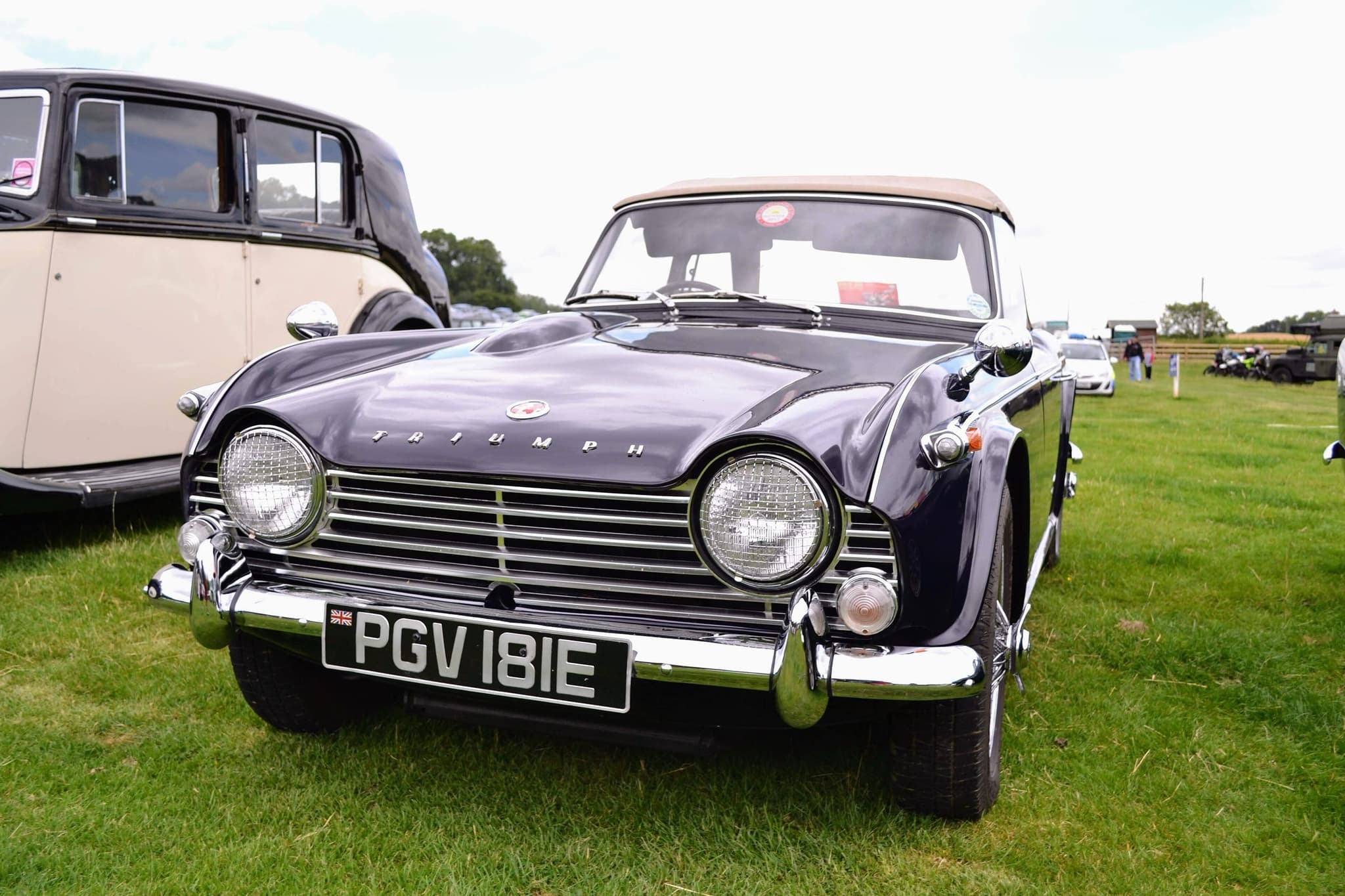
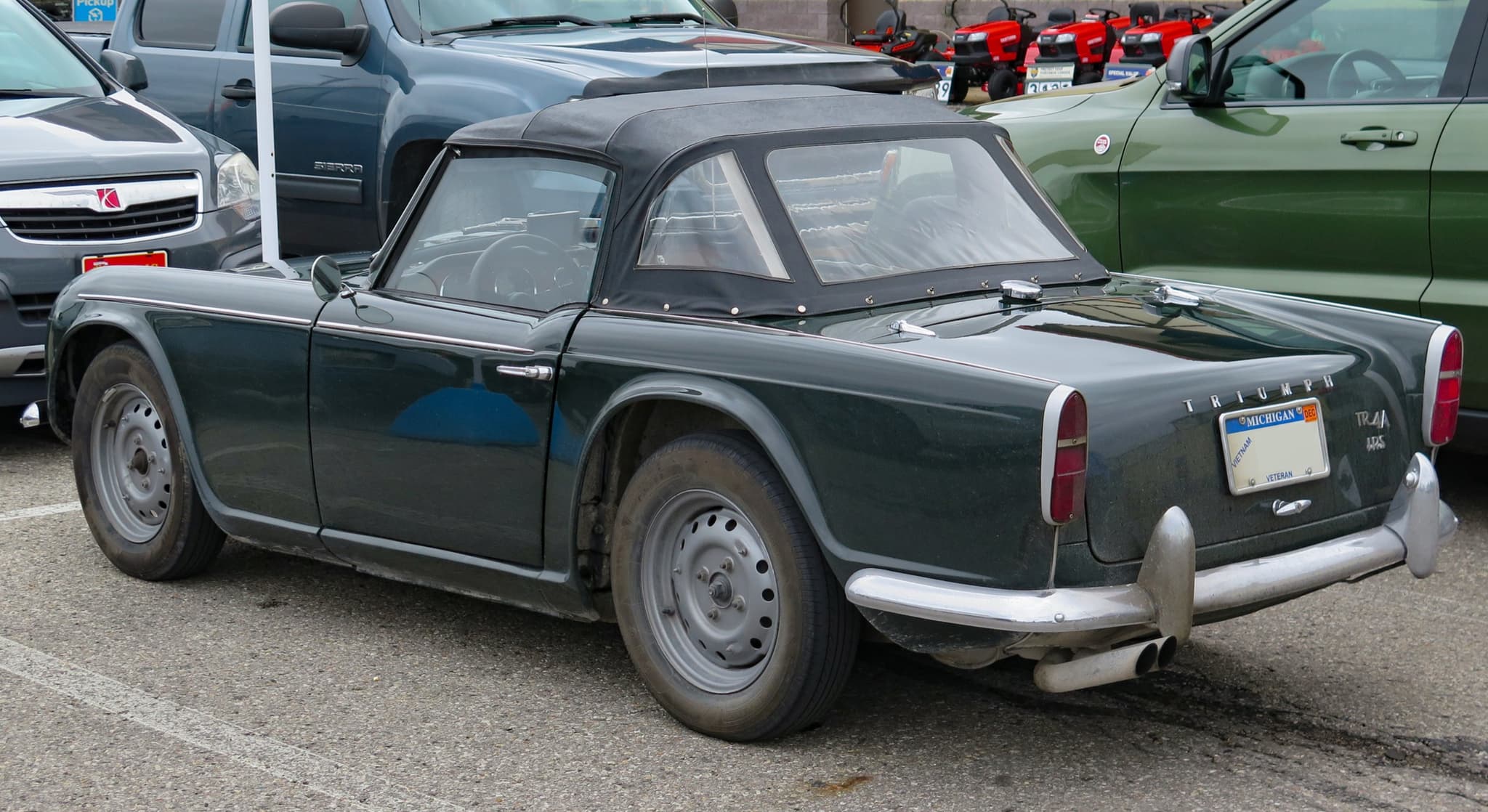
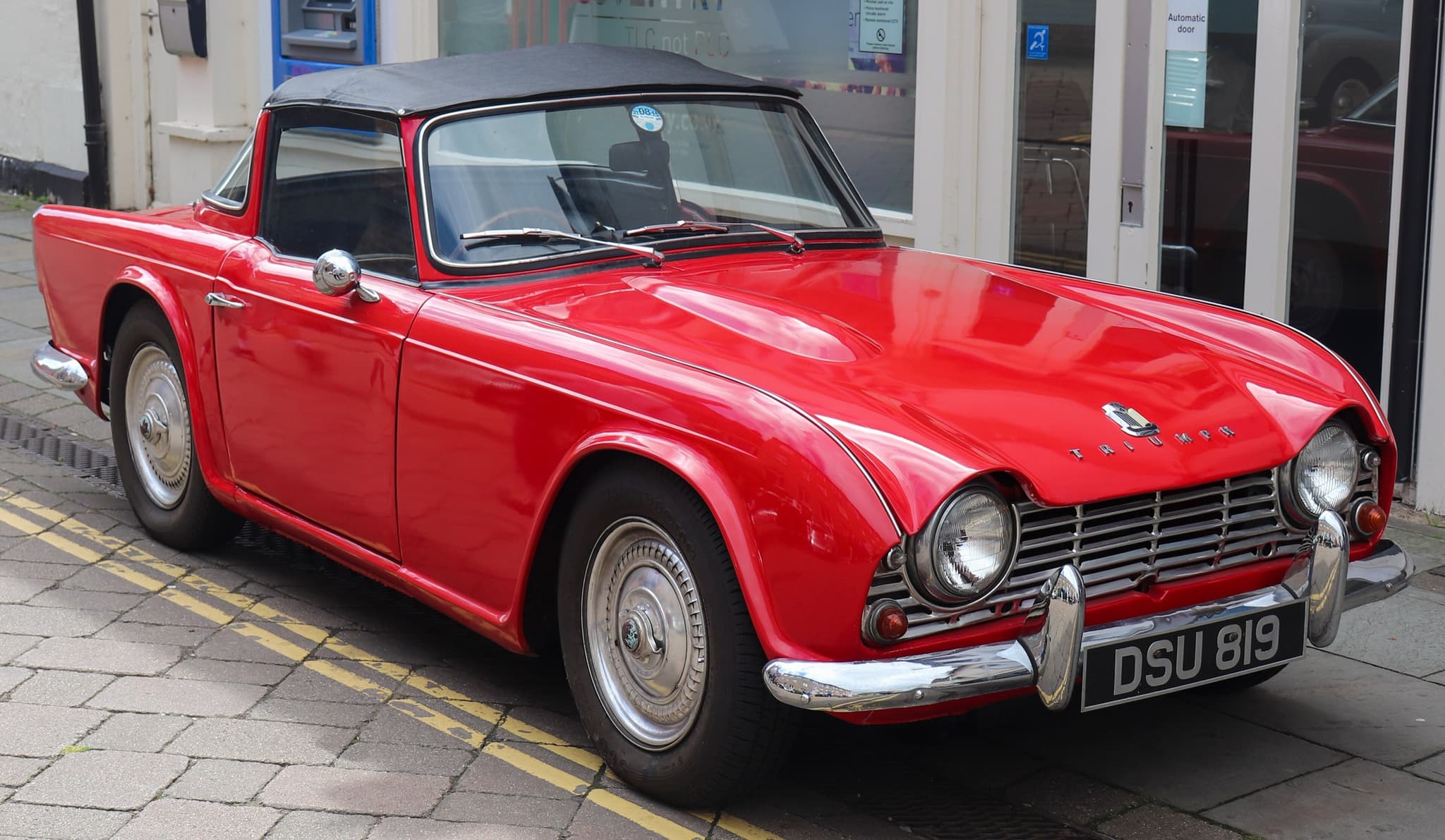
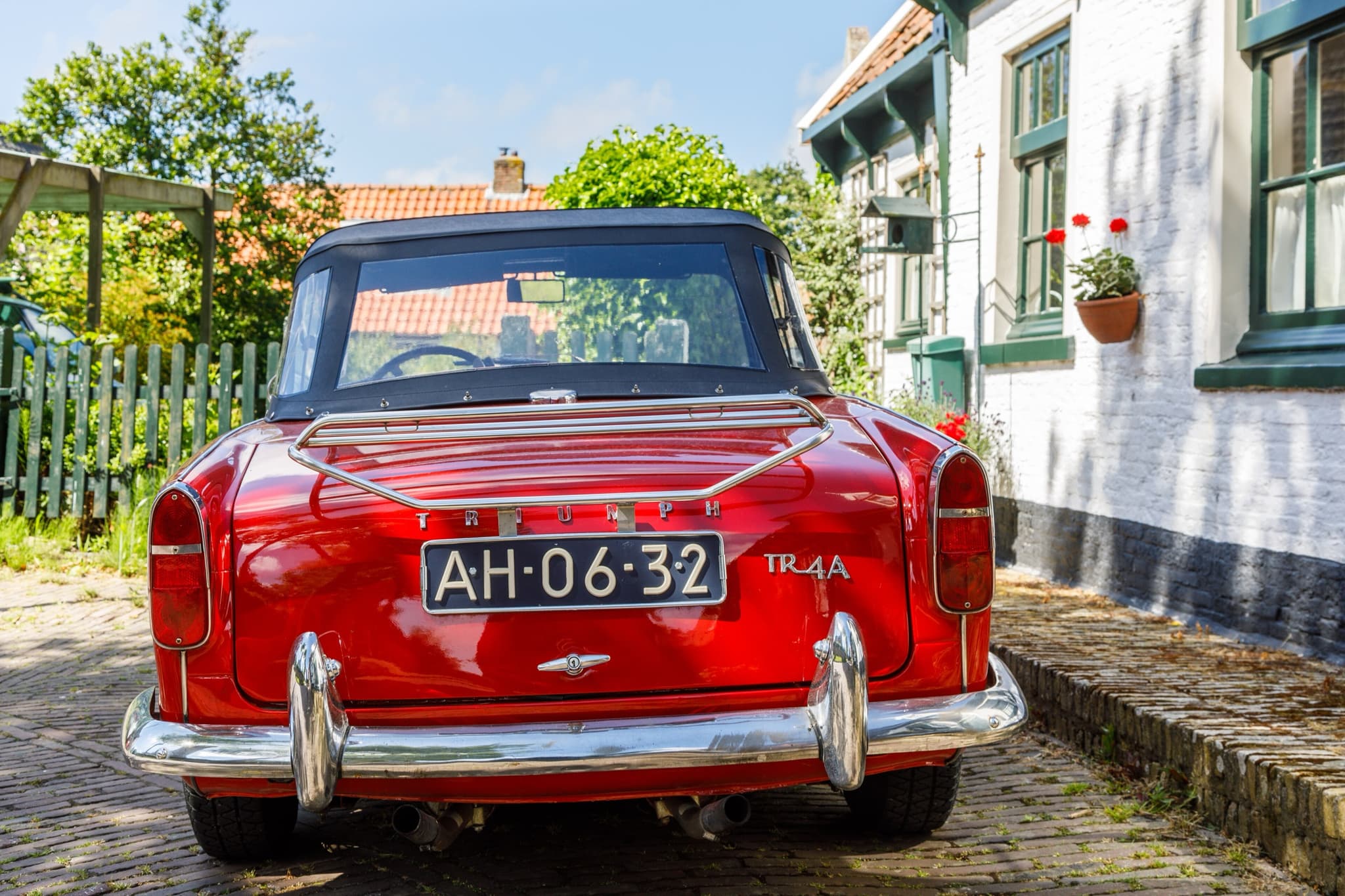
The quickest way to tell a TR4 from a TR4A is to look at the front. The TR4's sidelamps and indicators sit in the outer corners of its stamped grille, and its sides are plain. The TR4A lifted them onto the front wings (fenders), each at the head of a chrome side strip, and replaced the grille with one of horizontal bars.
| Feature | TR4 | TR4A |
|---|---|---|
| Built | July 1961 to January 1965 | January 1965 to July 1967 |
| Commission numbers | CT1 to CT40304 | From CTC50001 (the Vintage Triumph Register) or CTC50006 (Rimmer); live-axle cars from CT50001, in the same series |
| Grille | Stamped, with the lamps in its outer corners | Horizontal bars; the lamps on the wings |
| Flanks | Plain | A chrome strip from the wing lamp back through the door |
| Bonnet (hood) badge | A TR4 shield | The Triumph globe |
| Boot (trunk) badges | TR4 | TR4A, and IRS on cars with independent suspension |
| Dashboard | Painted; walnut on many later cars | Walnut |
| Rear suspension | Live axle on leaf springs | Semi-trailing arms and coil springs, or a live axle on leaf springs in North America |
Inside, the TR4A's handbrake sits on the transmission tunnel, and its hood (soft top), on the Herald's pattern, folds away behind the seats.
On a TR4A the commission number shows the rear suspension. Cars with independent suspension carry the prefix CTC; live-axle cars carry CT, like the TR4, but take their numbers from the same series as the CTC cars, the Vintage Triumph Register notes. Underneath, an independent car has a pressed-steel bridge carrying the differential, with big aluminium trailing arms; a live-axle car has long leaf springs on brackets added to the new TR4A frame.
The roof options
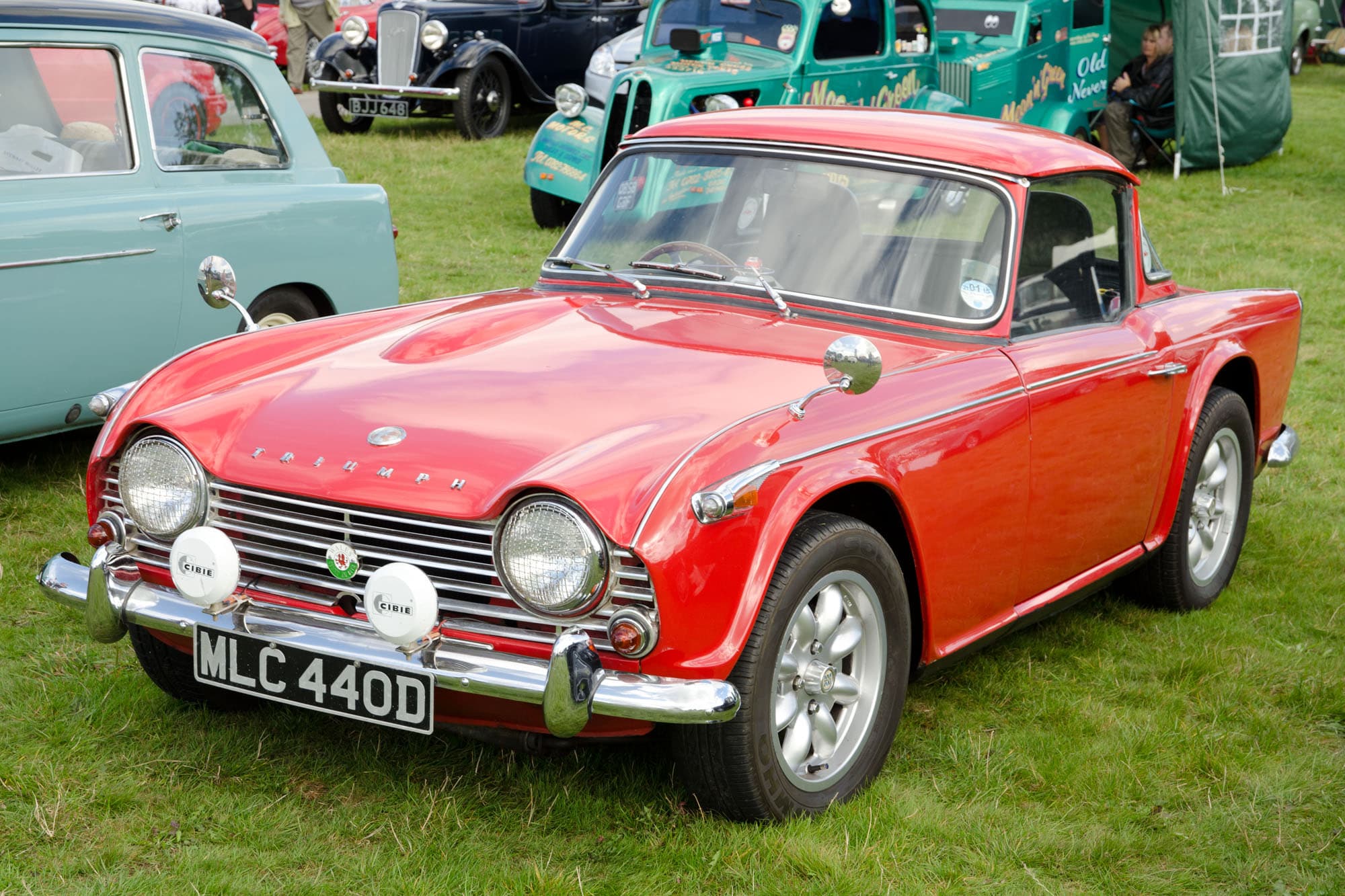
The TR4 and TR4A were open two-seaters, with three ways to close them. The TR4's hood kept its folding frame in the car, where the TR3A's frame came off; the TR4A's followed the Herald's pattern and stowed under a cover. The factory hardtop was in two pieces, a rear section with its own wrap-round window, fixed by four nuts, and a lift-out roof panel, of aluminium on the first cars and of steel on the rest. With the panel out, a vinyl insert on a frame could close the gap: the Surrey top, in the factory's own name for it. A hardtop car need not give up its hood either: Car and Driver noted in 1961 that "hardtop-equipped cars can be supplied with a soft top".
In America the hardtop car was a model in its own right on the price lists, and the TR4A kept the same roof options.source 2source 11source 4source 12source 7source 13source 14
The 2-litre option
To special order, a TR4 could have the TR3A's 2-litre engine in place of its own: the same block with smaller cylinder liners, offered, as Car and Driver explained in 1961, so that the car could race in the 2-litre class under the FIA's Appendix C. Graham Robson wrote that very few such cars were built, and the TR Register that few buyers chose it; no source read gives a count.
The works rally team used it. Classic & Sports Car reports that the four works TR4s were delivered in February 1962 with 2-litre engines, re-linered to the standard size before that year's Alpine Rally, and the three works cars on the 1964 Shell 4000 in Canada had 2-litre engines with Weber carburettors. The Vintage Triumph Register notes that engine numbers with the prefix CTA mark the 2-litre engine. For the TR4A the sources differ: the Vintage Triumph Register says the 2-litre engine was not a factory option, and the German TR Register's guide that it was ordered only in very small numbers.source 2source 1source 14source 15source 16source 6source 17
Markets
North America took the TR4 first and most of what followed. Rimmer's production table shows that more than nine TR4s in ten, and nearly nine TR4As in ten, were exported, and the catalogue's introduction says they went mainly to North America. The maker said as much in its own advertising:
Nine out of ten Triumph TR4A's are exported. Perhaps this doesn't surprise you. Possibly you think American turnpikes are more suitable for sports car motoring than our British roads.
The United States and Canada had a car of their own, the live-axle TR4A, and their own details. American TR4As had positive crankcase ventilation; Ate Up With Motor says it was to meet California's rules. They idled a little faster than cars for other markets, and their cabins, by the March 1965 announcement in the importer's owners' newsletter, had leather upholstery, carpets and a console between the seats. The Vintage Triumph Register adds that their front indicator lenses were white, that the factory fitted them no door mirrors, so dealers added their own, and that most left on radial tyres, usually Michelin X.
Canada had its own Standard-Triumph company, in Toronto, and in 1964 the works TR4s crossed the country on the Shell 4000 Rally; in 1965 a Triumph dealer won his class in Canadian racing in a TR4, and drove at Sebring the next spring. Germany had octagonal spinners on export wire wheels, as some other markets did. In Belgium TR4As were built up from kits, and an ICTC prefix marks them. In Italy, where Ducati was Triumph's distributor from 1962, the TR4s that Ducati is said to have assembled had indicators on their front wings, according to a Swiss classic-car magazine; the history gives the details. Racingsportscars lists TR4s racing in Japan, among them at Suzuka in November 1965, though no source read gives a figure for cars sold there.
Of the cars Britain kept, some went to the police: the history tells of the Southend pursuit car.source 1source 18source 13source 4source 3source 6source 5source 19source 20source 21source 22
Versions
Sources for Versions
- TR4
- 2138 cc: Dennis May, "Technical Report" on the TR-4 (cover story), Car and Driver, Oct 1961, pp. 19–23source 2; Bill Boddy ("W. B."), "The new Triumph TR4", Motor Sport, Sep 1961, p. 17source 11
- 40253 built: Graham Robson (essay "15 Years of Evolution"), Triumph TR2 – TR3/3A, TR4/4A – TR5, TR250 1953–1968 Parts & Accessories Catalogue, Rimmer Bros, edn 2.1 (source code TR2512), Part 1source 1; TR Register, "Triumph TR4 / TR4A Buyers Guide"source 14
- TR4A
- 28465 built: Graham Robson (essay "15 Years of Evolution"), Triumph TR2 – TR3/3A, TR4/4A – TR5, TR250 1953–1968 Parts & Accessories Catalogue, Rimmer Bros, edn 2.1 (source code TR2512), Part 1source 1; TR Register, "Triumph TR4 / TR4A Buyers Guide"source 14
- Dové GTR4
- around 55, including perhaps 10 GTR4As built: Aaron Severson, "Grandfather's Ax: The Many Evolutions of the Triumph TR4, Part 1: TR4 and TR4A", Ate Up With Motor, 22 Oct 2012source 4
- 50 or so built: Steve Dival, "The Dove GTR4", TR Drivers Clubsource 23
TR4
1961–1965 · 2138 cc
40253 built
TR4A
1965–1967
28465 built
Dové GTR4
1963–1966
around 55, including perhaps 10 GTR4As built or 50 or so
Pictures, top to bottom: Vauxford, CC BY-SA 4.0; Joachim Kohler, CC BY-SA 4.0; Andrew Bone, CC BY 4.0.
Sources
Every source the site cites is on the sources page.
- Primarymade at the time, by the maker or by people who were there
- Referenceserious later work: clubs, specialists, magazines, books
- Databaseresults and listings, entry by entry
- Graham Robson (essay "15 Years of Evolution"), Triumph TR2 – TR3/3A, TR4/4A – TR5, TR250 1953–1968 Parts & Accessories Catalogue, Rimmer Bros, edn 2.1 (source code TR2512), Part 1, p. 5, the TR4A's two forms; p. 7, the number list, July 1961 to July 1967; p. 7, CT1, CT40304, CTC50006; p. 5, "to special order", very few built; p. 1, exports "mainly to North America"; p. 6, the production table, home and export; p. 8, the US idle speed; p. 6, "TR Production Figures: 1953 to 1968". rimmerbros.com/images/PDFs/TR2-5_Part1.pdf Reference
- Dennis May, "Technical Report" on the TR-4 (cover story), Car and Driver, Oct 1961, pp. 19–23, "TR-4"; pp. 21–22, the hood, the hardtop on four nuts, the insert; "hardtop-equipped cars can be supplied with a soft top"; p. 20, the two-litre engine for Appendix C; pp. 19-23, "Technical Report". Primary
- Triumph Sports Owners Association, Triumph Sports Owners Association Newsletter, March 1965, Mar 1965 (vol. 11 no. 3), "TR-4A"; the TR4A's US specification: PCV, leather seats, carpet, console. vintagetriumphregister.org/tsoa/TSOA0365.pdf Primary
- Aaron Severson, "Grandfather's Ax: The Many Evolutions of the Triumph TR4, Part 1: TR4 and TR4A", Ate Up With Motor, 22 Oct 2012, the Dové sidebar; "The Independent TR4": the new frame, the trailing arms, the leaf springs on the live-axle cars; steel panels on all but the earliest cars; the hardtop model on US price lists; the TR4A's hood; PCV and California; Dové sidebar. ateupwithmotor.com/model-histories/triumph-tr4-tr4a/view-all Reference
- Arthur Kelly (the VTR's TR4 consultant), "TR4": "A Historical Overview of the TR4" and the TR4 commission-number page, Vintage Triumph Register, TR4 identification; octagonal safety spinners on export wire wheels. vintagetriumphregister.org/tr4 Reference
- Vintage Triumph Register, "TR4A" (history, change points and yearly output, buyer's and spotter's guides, numbering), spotter's guide; numbers section: CTC50001, the CT cars in the CTC series; the IRS bridge; the CTA engine prefix; not a factory option on the TR4A; US cars: front indicator lenses, dealers' mirrors, radial tyres; the ICTC prefix. vintagetriumphregister.org/tr4a Reference
- TR Drivers Club, "Early Cars: The TR4A", the TR4A's grille, lamps, badges, dashboard, handbrake and hood; the TR4A's Herald-pattern hood. trdrivers.com/earlycars/tr4A.html Reference
- Revington TR, "TR4A: Technical Specification Change Points", CT50001, the first live-axle TR4A. revingtontr.com/the-tr-series/tr4a/technical-specification-change-points Reference
- Xavier Audiau, "Triumph TR2 Francorchamps, 1955: 22, v'là la Triumph !", Autoretro, no. 397, May 2015, pp. 12–19, the Impéria Francorchamps on the TR2. beaulieumotorbe.ares.as35334.website/beaulieumotor/news/fichier/fichier_news_3_10012022161327.PDF Reference
- Klaus Rosshuber, "Triumph TR2 Francorchamps: Classic Cars – Ein Traum wird wahr", Auto Zeitung, 7 Sep 2023, the Francorchamps, 1954–55. autozeitung.de/fahrbericht-triumph-tr2-franchorchamps-69954.html Reference
- Bill Boddy ("W. B."), "The new Triumph TR4", Motor Sport, Sep 1961, p. 17, p. 17, the hardtop and the Surrey; p. 17. motorsportmagazine.com/archive/article/september-1961/17/the-new-triumph-tr4 Primary
- TR Drivers Club, "Early Cars: The TR4", aluminium roof panels on the first cars. trdrivers.com/earlycars/tr4.html Reference
- Motor Sport, "Cornering fast in a Triumph TR4A…" (Standard-Triumph advertisement, with price list), May 1966, p. 49, p. 49, the TR4A hard-top model; p. 49, "Nine out of ten Triumph TR4A's are exported". motorsportmagazine.com/archive/article/may-1966/49/1-cornering-fast-in-a-triumph-tr4a-youre-glad-of-2 Primary
- TR Register, "Triumph TR4 / TR4A Buyers Guide", steel or glass-fibre hardtops on the TR4 and TR4A; "few opted for this"; TR4 model summary; TR4A model summary. tr-register.co.uk/resources/buyers-guide/triumph-tr4-4a Reference
- Julian Balme, "TR4: Triumph's rally underdog", Classic & Sports Car, 4 Aug 2021, the works cars' 2-litre engines, re-linered before the 1962 Alpine. classicandsportscar.com/features/tr4-triumphs-rally-underdog Reference
- Triumph Sports Owners Association, Triumph Sports Owners Association Newsletter, January 1965, Jan 1965 (vol. 11 no. 1), the Shell 4000 cars' 2-litre Weber engines. vintagetriumphregister.org/tsoa/TSOA0165.pdf Primary
- Bruno Dwinger, "Geschichte, Typenkunde und Kaufberatung: Standard-Triumph TR4, TR5/TR250 – 'die Michelotti Autos'", TR-Register Deutschland, 2009, 13 pp. (PDF), p. 4, the 2-litre engine on the TR4A. tr-register.de/wp-content/uploads/2025/08/Kaufberatung-TR4-und-TR5-und-TR250.pdf Reference
- G. William Krause, The Illustrated History of Triumph Sports and Racing Cars, CarTech, 2017, p. 56, "95 percent" for the US market. static.summitracing.com/global/images/technicalarticles/sad-ct596.pdf Reference
- Triumph Sports Owners Association, Triumph Sports Owners Association Newsletter, May 1964, May 1964 (vol. 10 no. 5), Standard-Triumph (Canada) Ltd, Toronto; the Shell 4000. vintagetriumphregister.org/tsoa/TSOA0564.pdf Primary
- Triumph Sports Owners Association, Triumph Sports Owners Association Newsletter, March 1966, Mar 1966 (vol. 12 no. 3), Craig Hill's class win in Canada, 1965. vintagetriumphregister.org/tsoa/TSOA0366.pdf Primary
- Paul Krüger, "Was der Triumph TR4 mit Ducati zu tun hat", zwischengas.com, 18 Jun 2022, Ducati and the Italian TR4s. zwischengas.com/de/blog/2022/06/18/Was-der-Triumph-TR4-mit-Ducati-zu-tun-hat.html Reference
- racingsportscars.com, "Triumph TR4 – All Results", entries by country: Japan. racingsportscars.com/type/results/Triumph/TR4.html Database
- Steve Dival, "The Dove GTR4", TR Drivers Club, article. trdrivers.com/articles21/thedovegtr4.html Reference